
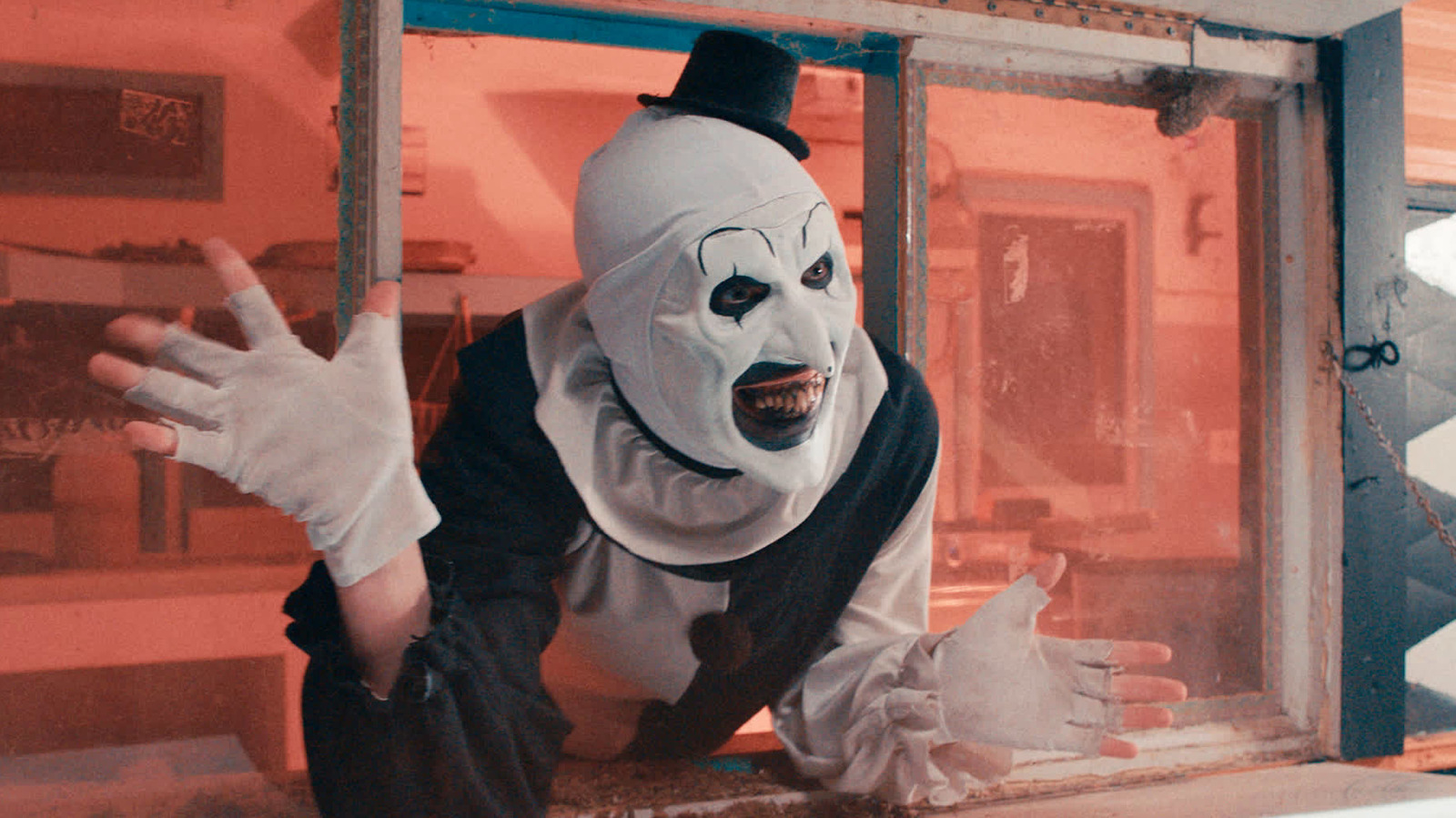
Horror fans are used to lawsuits sounding less exciting than masked killers, cursed forests, and clowns with garbage bags full of weapons. But lately, some of the genre’s biggest names have been dragged into court-adjacent stories that say a lot about how horror gets made, marketed, and monetized. Art the Clown may not talk, but the court filings certainly do.
Here is what is actually happening, and why three very different disputes keep pointing at the same nervous question.
The Terrifier lawsuit, explained
On October 26, 2025, actress Catherine Corcoran, who played Dawn in the original 2016 Terrifier, filed a lawsuit in connection with the film. The complaint names director Damien Leone, producer Phil Falcone, and the production banners Dark Age Cinema and Fuzz on the Lens Productions.
The core of the money dispute is a backend deal. According to the complaint, Corcoran agreed to work for an extremely low up front rate, reported as the then SAG minimum of around $100 per day, in exchange for a cut of the film’s success down the line. The suit says that cut was 1% of profits from Terrifier, future films in the franchise, and related merchandise. Corcoran alleges she has received only about $8,341 in royalties from what has since become a multi million dollar franchise, according to Variety and The Hollywood Reporter.
The lawsuit goes further than residuals. It also raises allegations around nudity and consent tied to the film’s infamous upside down hacksaw scene. Per NBC News, the complaint alleges that producers never obtained her informed written consent to film the scene as required by SAG guidelines, and that nude still images were taken and later used without that consent, including on merchandise. These are allegations in a civil complaint. They have not been proven in court.
Representatives for Leone and Falcone have denied the claims. “Damien and Phil deny the claims in the complaint and will vigorously defend this lawsuit,” their lawyer said in a statement to Gizmodo. Leone has also reportedly sought dismissal of the suit. Nothing here has been decided, and both sides will get their turn.
Why this one stings for the fandom
Terrifier is one of the great modern underdog stories. It started as a scrappy, self funded, aggressively low budget indie built on practical gore and stubbornness, and it grew into a genuine box office force. Art the Clown became one of the biggest new horror icons of the century, which is not a sentence anyone expected to write about a silent mime with a trash bag.
That is exactly why this case gets attention. The clean version of the Terrifier legend is the miracle: no money, no permission, no chance, and it worked anyway. A lawsuit like this asks the less fun follow up. When the miracle pays off years later, who took the early risks, and who shares in the reward? You do not have to decide who is right to notice that the question is a real one.
And now, who actually owns Art the Clown?
The Corcoran suit is not the only legal cloud over the franchise. There is a second one, and this one goes at the character himself.
In 2026, Ruthless Studios filed a federal lawsuit in California against the production companies Dark Age Cinema and Art the Clown LLC, alleging copyright infringement, trademark infringement, unfair competition, and improperly profiting from the Terrifier franchise without authorization. In other words, a fight over who owns the killer clown on all the merch.
At the center of it is a set of agreements from 2013. According to the complaint, Damien Leone transferred ownership of the original Terrifier short and The 9th Circle short, along with related copyrights, trademarks, sequel rights, and derivative works, to Ruthless Pictures for $5,000. Those rights were later assigned to Ruthless Studios, per reporting from NME.
The complaint alleges that Ruthless later let Leone make a low budget Terrifier feature as a one time exception, and that the company was then cut out as Terrifier 2 and Terrifier 3 were produced, merchandising deals were signed, and the brand expanded, all allegedly without notice or permission. Ruthless argues the sequels are “clearly derivative works of, and/or sequels to” the original short, and is seeking damages, an accounting of profits, and a court declaration that it owns the copyrights to Terrifier 2, Terrifier 3, and related sequels, merchandise, games, and events. Notably, the claim reportedly excludes the 2016 Terrifier feature.
These are allegations in a civil complaint, and they have not been proven. As of the reporting, Leone and the named companies had not yet responded to them in court. A $5,000 handshake in 2013 becoming a fight over a franchise a decade later is about the most horror thing that can happen to a piece of paper. Somewhere in a drawer, a short film contract has been quietly gestating this whole time.
The Scream mask fight
Over in franchise slasher land, the fight is not about a person. It is about a face made of rubber.
Ahead of Scream 7, Paramount and Spyglass sued the special effects studio Alterian, seeking to settle who actually owns the rights to the Ghostface mask. Paramount and Spyglass argue the mask was properly licensed for decades through the costume company Fun World, and that Alterian waited far too long to assert any claim. Their complaint frames Alterian as having “slept on” its purported rights for roughly thirty years before sending demand letters in 2024 and later threatening litigation.
Alterian tells it differently. The studio claims it created a similar ghost faced design called “The Wailer” back in 1991, and frames the dispute as copyright infringement. Fun World, for its part, has said it commissioned its own mask under a work made for hire arrangement.
One thing worth keeping straight: this is a fight over the mask, the physical iconic object, not the Ghostface character or the Scream movies themselves. In horror, the mask is never just a mask. Apparently, neither is the licensing paperwork.
The Blair Witch dispute
The longest running of the three goes back to found footage’s original viral legend.
When The Blair Witch Project became a massive hit in 1999, its three leads used their real first names, and the marketing leaned so hard into the “this is real” gimmick that some viewers genuinely thought the actors were dead. The performers, Heather Donahue (now Rei Hance), Joshua Leonard, and Michael C. Williams, have spent years raising concerns about compensation and the use of their names and likenesses. They sued distributor Artisan in 2000 and reportedly reached settlements.
The issue came back after Lionsgate and Blumhouse announced a new Blair Witch project. In 2024, the three actors publicly asked Lionsgate for retroactive residuals equivalent to what SAG-AFTRA representation would have secured, meaningful consultation on future Blair Witch projects, and a $60,000 grant to help an emerging genre filmmaker make a first feature. Leonard summed up the mood as “25 years of disrespect from the folks who’ve pocketed the lion’s share of the profits.”
In 2026, some of that history got folded into the reboot itself. Variety reported that Joshua Leonard and Michael C. Williams joined the new film as executive producers, alongside original creators Daniel Myrick, Eduardo Sánchez, and Gregg Hale. Rei Hance was not part of it, and has said publicly she is not participating. To be clear, that 2026 development is a producing deal and a public statement, not a newly filed lawsuit. Found footage, it turns out, can still leave a paper trail.
Different laws, same nervous question
Legally, these three have almost nothing in common. Terrifier is about actor compensation, profit participation, consent, and the alleged use of a performer’s likeness and body imagery. Scream is a copyright and licensing ownership fight over an object. Blair Witch is a decades long tangle of compensation, real names, likeness, and how uncredited early labor becomes valuable franchise IP.
What connects them is the shape of modern horror itself. More than almost any other genre, horror takes cheap materials, unknown faces, raw performances, and props built in someone’s garage, and turns them into mythology worth serious money. A $100 day and a mask sculpted decades ago do not look like assets until suddenly they are the whole brand. The point is not that horror is uniquely exploitative. It is that horror is uniquely good at turning small things into legends, and legends into revenue, which means the ownership questions arrive late and land hard. The call is coming from inside the contract.
What it means for the legend
None of this makes the movies less important to horror history. Terrifier is still a landmark of modern practical gore. Ghostface is still one of the most recognizable killers ever put on screen. The Blair Witch Project still changed what a horror movie could be with a camcorder and a lie. These cases do not erase any of that. They complicate the mythology around it.
Horror fans love the legend, the mask, the kill scene, and the miracle success story. The industry now has to answer a less fun but necessary question: who gets protected, credited, and paid when the nightmare becomes valuable?
iHorror is reporting on active and past legal disputes. The Terrifier allegations described here are unproven claims in a civil complaint, and the defendants deny them. iHorror does not take a position on the outcome of any of these cases.