

From Philly and the Pa. suburbs to South Jersey and Delaware, what would you like WHYY News to cover? Let us know!
As Philadelphia temperatures on Wednesday morning climbed toward a 105-degree heat index, doctors, nurses and paramedics formed a huddle inside the red-and-white candy cane striped medical tent at the FIFA Fan Festival at Lemon Hill to get their daily assignments and updates.
The region’s latest heat wave has health workers on high alert for heat-related illnesses and complications among World Cup fans and visitors to the outdoor festival. But medical teams say they have been preparing for a potential spike in patients since long before the festival opened.
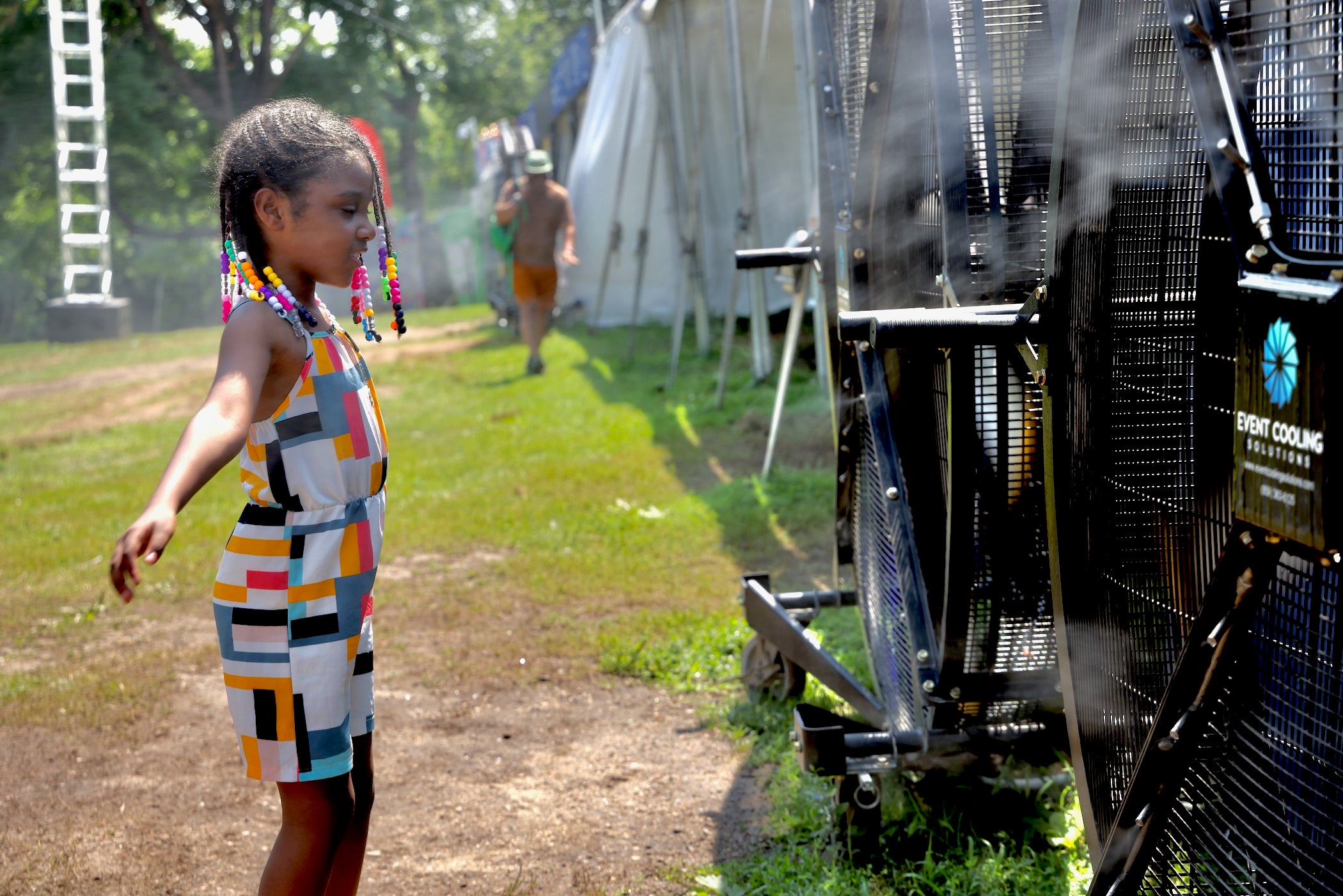
“Does anybody know how many medic units I have today?” one coordinator yelled over the sounds of fans and generators powering air conditioning units to cool down the space.
Outside, temperatures had already surpassed 90 degrees. Weather reports predicted even higher, dangerous triple-digit temperatures through the rest of the week.
Penn Medicine health workers and Philadelphia Fire Department paramedics staffing the festival’s medical operation say extreme heat was a top concern through months of World Cup preparation.
“In preplanning, we did something called a hazard vulnerability analysis, which weighs the risk of different threats,” said Dr. Jonathan Bar, director of emergency preparedness at Penn Medicine. “And at the top of the list was heat-related illness, so the infrastructure to manage that was here from the start, because we were anticipating this problem.”
Dr. Jonathan Bar, director of emergency preparedness at Penn Medicine, prepares for a day in the medical services tent at FIFA Fan Fest at Lemon Hill. (Emma Lee/WHYY)
Treating heat illness at outdoor events in Philly
Heat waves have become more frequent and intense in recent years because of human-driven climate change, making the summer months in Philadelphia increasingly brutal for residents and the thousands of visitors in town for the World Cup, America’s semiquincentennial celebration and other major events.
The medical tent at the FIFA Fan Festival was designed to triage patients for all kinds of injuries and illnesses, including heat sickness.
In minor cases, Bar said his team can swiftly treat people with heat rash from sweat-clogged pores, cramps from dehydration and salt loss, and mild leg swelling by offering a cool space, cold compresses and drinks with electrolytes.
Another treatment area in the tent is set up for people with heat exhaustion, a moderate type of heat illness that can include lightheadedness, dizziness and nausea. People with underlying medical conditions may be at risk for other complications, Bar said.
And then there’s the possibility of heat stroke, the most severe kind of heat-related illness.
“That means either confusion, altered mental status, seizures or even coma,” Bar said.
In the deepest part of the medical tent, a treatment area is sectioned off with privacy walls. The space contained a wheeled stretcher and a deep gray tub, just big enough for a single person and used to treat heat stroke.
A massive square cooler the size and height of a small hot tub was filled to the brim with ice just a few feet away. A half-dozen smaller coolers were also stocked with ice, ready to be mixed with water to quickly fill the gray tub.
“The heat stroke patients need to be dunked,” Bar said. “You’ll get put in here … and the goal is to cool you to a core temperature of 102 and then take you to a hospital.”
The rapid cooling technique is effective in preventing heat fatalities, but patients usually need to go to the hospital afterward to be monitored for downstream effects like organ damage, he said.
The medical teams at Lemon Hill have not had to use the tub for heat stroke cases since the fan festival opened June 11, and staff said they hope it stays that way.
People can be proactive by staying hydrated and drinking enough water throughout the day. The exact amount of water an individual should drink can vary greatly from person to person, Bar said.