

Cherri Gregg, narrating: This is a bonus episode of Dying on the Inside: Women Lifers at Muncy Prison. I’m Cherri Gregg, host and co-executive producer of the podcast.
When the Pennsylvania Supreme Court ruled in March that mandatory life without parole sentences for second-degree murder violate Pennsylvania’s constitution, it sent shockwaves through prisons across the Commonwealth. For the first time in decades, more than a thousand people serving those sentences, including more than two dozen women at SCI Muncy, had something many thought they’d never have again: hope.
But hope is complicated. The Court gave lawmakers 120 days to create a new sentencing framework. As legislators debated what that framework would look like, the women at Muncy were left waiting—trying to make sense of rumors, proposed legislation, and the possibility that after decades behind bars, they might one day have the opportunity to stand before the parole board. But that uncertainty has become its own kind of sentence.
[music]
This conversation was recorded just days after the Pennsylvania Senate passed SB 1400, legislation that would make many people serving second-degree murder sentences eligible for parole after serving 35 years in prison or after serving 20 years and at least age 70. The bill now heads to the Pennsylvania House, where lawmakers will decide what comes next.
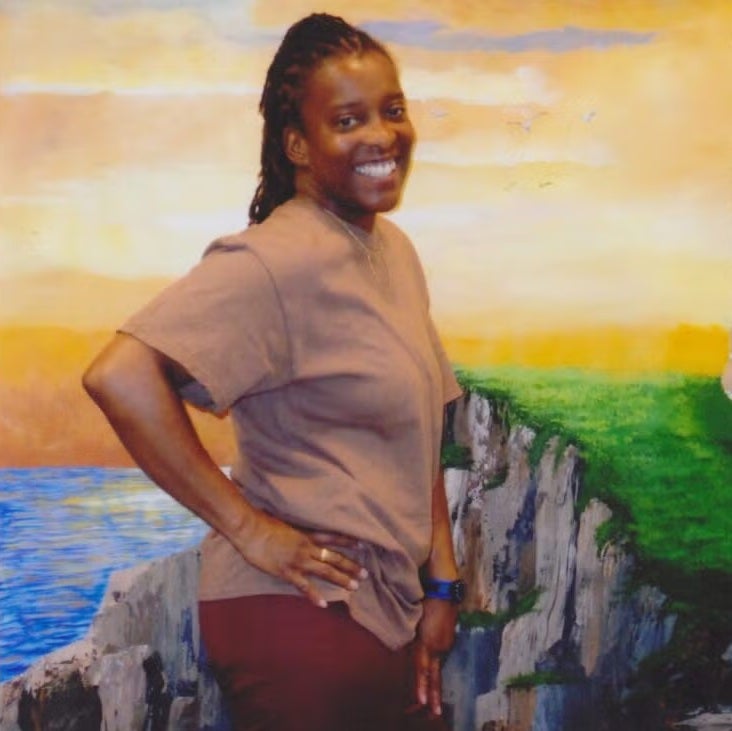
I spoke with Terri Harper, one of the women you’ve come to know throughout this series. Terri has spent more than 35 years at SCI Muncy. In this conversation, she reflects on the day the Derek Lee decision came down, what hope has looked like inside the prison over the past few months, and why, despite all the uncertainty, she refuses to give up faith.
Robovoice: To accept this free call, press one. To refuse this free call, press two. If you– thank you for using Securus, you may start the conversation now.
Terri Harper: Hello?
Cherri Gregg: Hi Terri, how are you?
Terri: I’m better, because I was sick for ten days.
Cherri: Yeah. Oh, you were sick for 10 days? Oh my goodness.
Terri: Oh god yes, it was horrible.
Cherri: And are you feeling better?
Terri: Much better. Much better. I have doctored myself up.
Cherri: That’s good, that’s good. So Terri, I kinda wanted to start by having you take me back to March, where you, I want you to tell me where you were and how you felt when you first heard about the Derek Lee decision from the Pennsylvania Supreme Court.
Terri: I can’t remember if I was on the walkway or at an appointment, but everybody started yelling and I was like, What the hell is going on? Why is everybody screaming and hollering? And they was like Terri, they sided with Derek Lee. They [unclear] and I was like, Are you kidding me? And so I ran back to the unit and got on the emails and looked on the kiosk and I had the message from, I think it was from Mama Pat first, I forget. But as soon as I saw it, I was like, Oh God, you are so good. And everybody was like, What you over there talking about Ms. Terri? I said, The second degree, it finally happened. And so five minutes go by and I’m reading the email and everybody’s coming in the common room and I’m like, Oh my god, who in this unit has second degree? And I couldn’t remember who in this unit besides myself had second degree. And so, I calmed myself and then went on back out to another appointment and ran into Tameka and Dog and everybody was just acting a fool. So it was one of those kind of situations of how I found out.
Cherri: Yeah, so everybody, and what was the reaction? I mean, the atmosphere, the vibe at Muncy after the ruling and the days after.
Terri: It was like a whole new day. You know how you wake up and you just say, Okay, this is a good day. It’s going to be a good day. Nothing’s getting in the way. That was the feeling that I got from everybody. People that I know are not normally upbeat and positive were on a whole other planet of positives. And so it was nice to see. And then for the staff members, they ran down on me and was like, Please tell me that you’re affected by the second degree, just tell me that. And for me to say, Yes, I am—
Robovoice: This is a call from Pennsylvania State Correctional Institution Muncy. This call is subject to recording and monitoring.
Terri: And to have a couple of them, like, have to hide their emotions because they were happy for me.
Cherri: Wow.
Terri: It was amazing, but not a surprise, because I know who I am and I know how I treat people. And I know that everybody that knows me or pays attention to the things that I say and do know that my next breath is for me being home with my girls.
Cherri: Yeah, and so how were you getting information? How did you find out about this, how do you keep up with what’s happening?
Terri: Well, most people have an email account with the people from either Decarcerate PA, CADB, the Women’s Lifers Resume Project. Mostly the first part was everybody got some type of email. And then when people got on the phone to call different people, it was like, everybody was like, Did you read the news!? For the most part, it was about the emails and then the phone calls.
Cherri: You know, one thing we’ve heard of is that some of the women have felt like there was a lot of uncertainty, not knowing what the lawmakers are gonna do, because basically the Pennsylvania Supreme Court kicked it back to the lawmakers, told them to figure this out. And if they don’t figure it out, it goes to the courts. And so this not knowing what the outcome is gonna be—
Robovoice: This is a call from Pennsylvania State Correctional Institution, Muncy. This call is subject to recording and monitoring.
Terri: I can’t say that I’m stressed out about it because at the same time this came up, my commutation process started again. We had constant conversation. How you feeling? What’s on your mind? You know, have you even given thought to making a plan for what you want to do first, like? So we constantly have a conversation about it at least once a week. And so I think that that’s what has kept me from being stressed out because here’s the bottom line for me: God got it. We have prayed for decades for some sign of relief, and we have been given that sign. So now my mind is stay grateful, stay constant, stay patient, and stay prayed up, because we don’t know what’s gonna happen. I give it to God. Because had I not done that, I would not have made it to this 35 plus.
Cherri: Speaking of 35 plus, the Senate has now passed Senate Bill 1400, which would generally make people serving second degree murder sentences eligible for parole after 35 years. You made it to 35. The other option is for people at the age of 70 to be-make it to parole if they served at least 20 years. What’s your reaction to that proposal from the Pennsylvania Senate?
Terri: I’m not surprised, but my initial thought was that it was going to be 30 or more, because things that have been said in the past about first degree and any relief that might come their way was at 35 and up. So I’m not surprised by it. However, I feel like with the rumors that were floating around about they put, they had actually written up two separate proposals. But they kept in one to see what the social outcry was gonna be before they decided which one they were actually going to try to pass. It was so many rumors about it that we all just was like, Everybody chill, let them do their work.
And so I think that the fact that I do have 35 plus in already made me say, Okay, that’s a start. And then for somebody that’s close to me that only has 31 in, she turned around and she said, I can do another four years on my [unclear].
Cherri: Yeah. Yeah, so people who are close to the 35 are like, all right, all right, I could qualify for this.
Terri: Yes, yes.
Cherri: You know, what has been the reaction for people who don’t-are not close to 30? Some people have said 35 years still feels like life, you know?
Terri: Right, right.
Cherri: While other people have said they’re grateful for a chance of parole. I mean, what have you been hearing for folks on that spectrum?
Terri: I get it because they’re younger. They’re still fresh in their time. And so they know what it is to struggle, but they don’t know what it is to struggle. So, when you’re at 10, when you’re at 15. You can’t even imagine 35, because I know I couldn’t. And so now that I’m at 35, listening to the youngins, I say to them, you got to stay grounded and rooted in what you believe in. Do you believe that there’s a chance for you? Because if you do, you gotta keep pushing. You gotta keep pushing. Somebody told it to me, so I tell it to them.
Cherri: Yeah, so if the lawmakers don’t reach an agreement the cases are going to be sent back to the counties for resentencing and everybody will have to go up one by one. You know, is anybody talking about that? Because we’re less than 30 days away from the deadline that the court said.
Terri: Right, yes. The only thing that’s really been said about that has been more about staff, more staff members than actually people here saying it. Because for those that had come from the small counties, a few of them had been a little worried about how the county would drag their feet to get them some relief. And then those of us that come from Philadelphia and those that come from Pittsburgh are all like, Oh my God, there’s 1,100 plus. This might take two, three, four years.
Cherri: Yeah, yeah.
Terri: And so, people have been in that mindset as well. And I think that everybody is just trying to float in that gratitude so much so, that they don’t want to say too much.
Cherri: Yeah, we only have three more minutes, so I have to ask you about, you know, what you think the law should say, because right now the proposal going to the House Judiciary Committee from the Senate is 35 years up for parole or age of 70 and 20 years served. What do you think it should look like? If you were in charge and you were the lawmaker, what would that-what would the sentence look like? What would that bill look like?
Terri: If I was in charge, I would keep it in numbers and not even have L-I-F-E included.
Cherri: Okay.
Terri: I wouldn’t even have that included in the sentence.
Cherri: Okay. You know, the lawmakers are deliberating about this, it’s now in the House Judiciary Committee. We know what the Senate thinks. What’s your biggest concern?
Terri: When you hear people talk, especially staff members here, they talk a lot about, Well, you know, if your co-defendant is the one that did it, why are you still in jail? And so you hear that and then I hear it from my peers as well. And so there’s always going to be that thing in my head as to, I know with my situation it’s different. I had a real job. I was a police officer. I had a public trust position that I ruined. I understand that there’s always going to be a different level of scrutiny for me and my situation, but I also know the truth.
Cherri: Women like yourself who are serving life, do you feel like y’all are represented and your voices are heard by the lawmakers?
Terri: Not enough, not enough. But we hope to change that July the 23rd when we have our legislative forum here.
Cherri: Terri, anything else you wanna add in the last 10 seconds?
Terri: Um, no, just thank you for including me as always. Thank you for letting my voice rank and hopefully they will make the right decision that everybody can agree with and be able to live through.
Cherri, narrating: That was Terri Harper. Terri is serving a life without parole sentence at SCI Muncy, where she has spent the past 35 years behind bars. State legislators will be visiting SCI Muncy on July 23rd to hear from some of the women impacted and others serving life and lengthy sentences. But it’s just one day before the state supreme court deadline to find a solution. We will continue following this story as it unfolds.
If you’d like to learn more about the women of SCI Muncy, listen to all five episodes of Dying on the Inside: Women Lifers at Muncy Prison, along with our growing collection of bonus episodes featuring conversations with advocates, lawmakers, historians, and women directly impacted by the criminal legal system.
[music]
Dying on the Inside: Women Lifers at Muncy Prison is a production of Create.Genius.Media and Temple University’s Logan Center for Urban Investigative Reporting.
I’m Cherri Gregg, Executive Producer and Host.
The podcast’s Executive Producer, Producer, and Script Writer is Yvonne Latty, the Director of The Logan Center.
Sound Design, Mixing, and Mastering by Natalie Reitz.
Original music by Theodore Damascus Merz and Jarvis Cain.
Our Podcast Art is by Tracy Agostarola.
Funding support comes from The People’s Media Fund, Women’s International Media Foundation, Jonathan Logan Family Foundation, The Lenfest Institute for Journalism, Eppchez Yo-Sí Yes, and Temple University’s Klein College of Media and Communication.
Thanks to WHYY’s Head of Digital Studios Tom Grahsler and Audio General Manager Joan Isabella. And special thanks to WHYY Audio engineer Al Banks who helped with this bonus episode.
Please rate and review wherever you are listening and hit us up on social media @dyingontheinsidepodcast. We would love to hear from you. Also check out our stories at whyy.org/dyingontheinside.
This podcast is presented by WHYY. Thanks for listening.