
(Photo by Paul Weaver/SOPA Images/LightRocket via Getty Images)
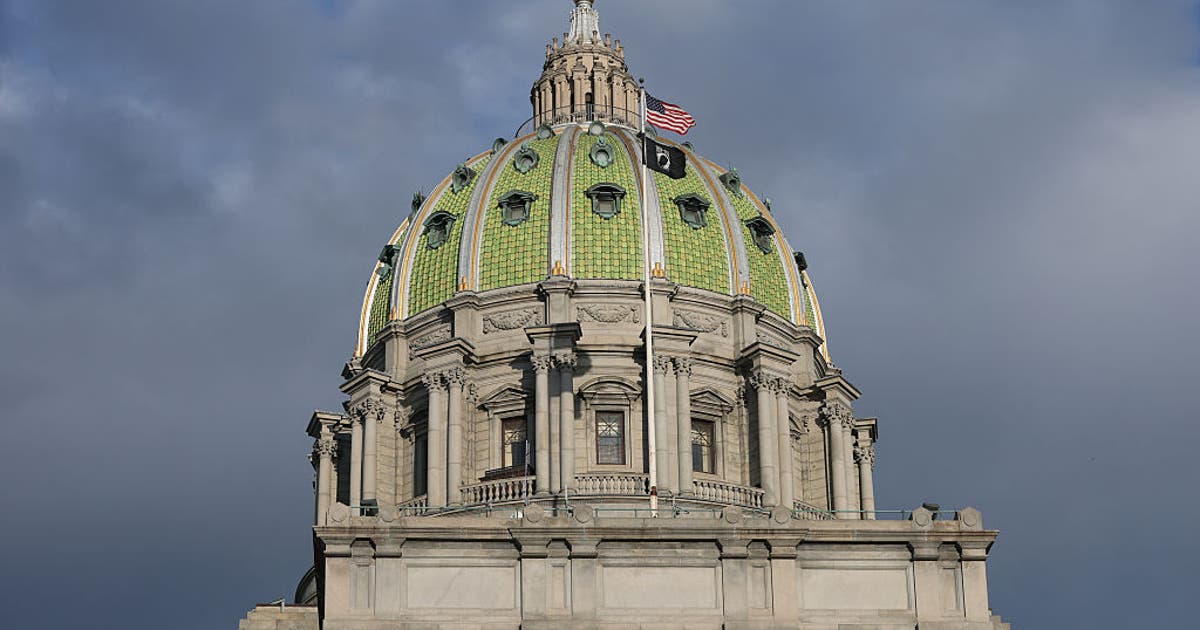
HARRISBURG, PA. – The Pennsylvania General Assembly finalized a $50.8 billion state budget on Sunday, concluding bipartisan negotiations before Gov. Josh Shapiro officially signed the spending package into law later Sunday evening.
The final agreement funds state operations without including new broad-based tax increases and does not draw from the state’s estimated $8 billion emergency savings account, according to legislative records and statements released by state lawmakers.
According to reporting by Spotlight PA, lawmakers managed to avoid drawing from that $8 billion emergency account through specific fiscal maneuvers, including the transfer of more than $500 million from off-budget special funds and delaying state payments to Medicaid managed care organizations.
Several of the executive branch’s highest-profile policy proposals were entirely omitted from the final compromise package. Spotlight PA noted that the final spending framework does not include provisions to legalize and tax recreational adult-use marijuana, nor does it alter the state’s minimum wage, which remains at the federal floor of $7.25 per hour.
The policy omissions reflect a scaled-down final agreement after months of negotiations, which whittled Gov. Josh Shapiro’s original $53.3 billion proposal—which he detailed during his annual budget address to a joint session of the General Assembly—down to the finalized $50.8 billion total that he ultimately signed into law.
Public education allocations
Dig deeper:
The education budget framework includes the passage of House Bill 1505, which authorizes more than $900 million in new educational funding. According to legislative data, the specific allocations include:
- $565 million designated for adequacy and property tax equity funding, with a structural minimum increase of $50,000 for each school district.
- $100 million for public school safety and mental health grants, with an additional $20.7 million allocated for safety grants to nonpublic schools.
- $58 million in new Basic Education Funding and a $55 million increase in Special Education Funding.
- $41 million for early intervention services, alongside language establishing Pennsylvania Pre-K Counts eligibility for regional intermediate units.
(Photo by Steve Pfost/Newsday RM via Getty Images)
The statutory text also introduces non-financial mandates, requiring public and private schools to provide a minimum of 30 minutes of daily recess for students in full-day kindergarten through fifth grade.
Post-retirement pension adjustments
The spending plan also includes the first post-retirement pension adjustments for state public servants since 2001, according to a statement from State Rep. Ed Neilson (D-Philadelphia).
Funded through a dedicated account within the Municipal Pension Aid Fund, the budget outlines a cost-of-living adjustment (COLA) for eligible retirees within the Public-School Employees’ Retirement System and the State Employees’ Retirement System who retired prior to July 2, 2001.
Eligible retired public school employees, state workers, municipal police officers and firefighters will also reportedly receive permanent pension increases ranging between 15% and 24.5%, depending on their original date of retirement, with payments beginning after July 1, 2026.
Mass transit, skill games and regulatory mandates
The final framework also bypassed a major priority for legislative Democrats by failing to include new, recurring state funding for mass transit systems like SEPTA, according to Spotlight PA reporting.
Lawmakers also completely omitted a highly anticipated regulatory framework and tax structure for slot-style “games of skill,” leaving the status of the controversial machines unresolved.
The compromise does, however, establish a new regulatory mandate requiring all data centers operating within the Commonwealth to formally track and report their annual electricity and water consumption directly to the state government.
Mental health and health care funding
Additionally, the budget allocates $41.2 million for statewide mental health services, according to State Rep. Mike Schlossberg (D-Lehigh).
The allocation features state funding to support operations of the 988 crisis call line, alongside state funding adjustments intended to stabilize Medical Assistance and the Children’s Health Insurance Program (CHIP) in response to shifts in federal health care funding.
Enacted into law
What’s next:
Following its swift passage by the General Assembly during a flurry of weekend voting, Governor Josh Shapiro officially signed the $50.8 billion bipartisan spending package into law later Sunday evening, cementing the final budget agreement for the 2026–27 fiscal year.
The Source: Information was sourced from legislative records, statements from state lawmakers, Spotlight PA reporting and bill text.
Pennsylvania PoliticsNewsJosh ShapiroPolitics