

With the 2027 Punjab Assembly elections drawing closer, the Congress finds itself battling an internal political storm that threatens to overshadow its preparations for the crucial electoral contest. What began as a debate over the party’s state leadership has now evolved into a full-blown factional battle, presenting the Congress high command with a major organisational challenge in Punjab.
Several senior Congress leaders are widely seen as Chief Ministerial aspirants, making the post of Punjab Congress president far more than an organisational responsibility. The position has become the focal point of the party’s internal power struggle.
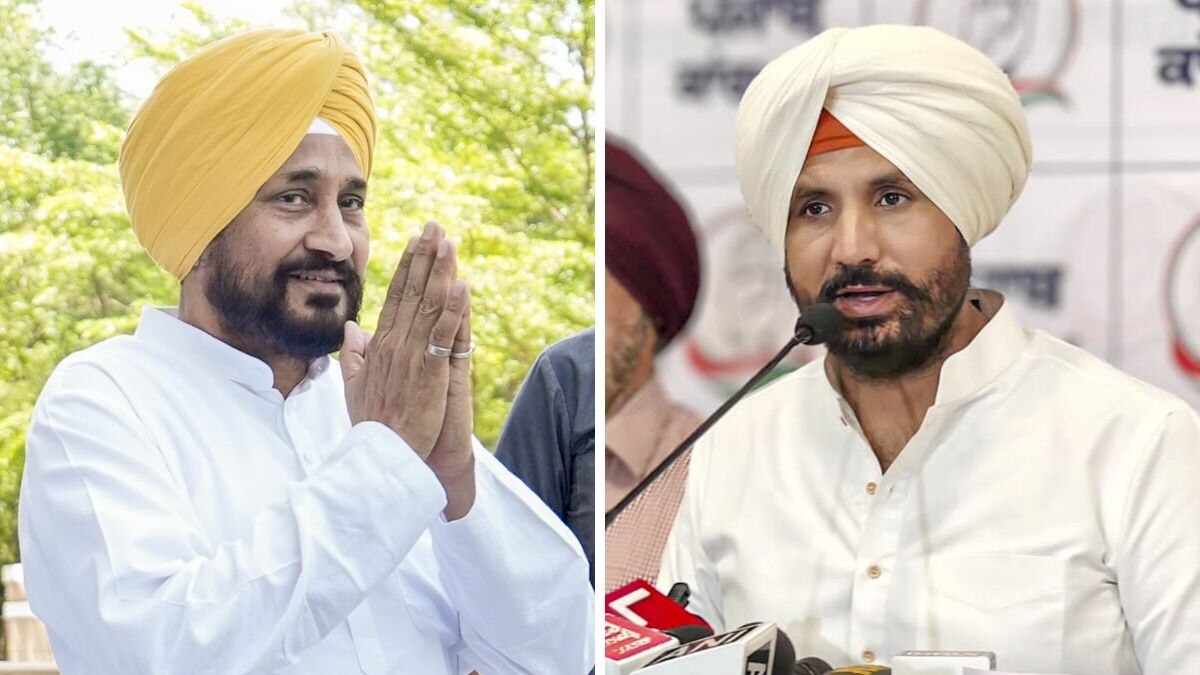
The latest confrontation was triggered after the recent local body elections. While the Congress performed strongly in areas represented by former Chief Minister Charanjit Singh Channi, the party’s showing in Punjab Congress chief Amarinder Singh Raja Warring’s political turf was comparatively underwhelming. Sensing an opportunity, a powerful section within the party intensified its demand for Warring’s replacement.
The Congress leadership, however, decided against making any abrupt changes. According to party sources, the high command held nearly eight rounds of consultations before arriving at a decision. It also considered a detailed assessment by Bhupesh Baghel and recommendations from a committee headed by senior leader Ajay Maken.
Eventually, the leadership chose to retain Warring as Punjab Congress president while attempting to balance competing ambitions by distributing key organisational responsibilities among senior leaders.
Channi was appointed chairman of the Campaign Committee, while other prominent leaders were accommodated as chairpersons and members of various election-related committees. The appointments were also designed to maintain social balance by ensuring representation for Punjab’s major communities, including Jat Sikhs, Dalit Sikhs and Hindus.
Within the Congress, the Campaign Committee chief is often regarded as the party’s unofficial Chief Ministerial face when it is in the Opposition, making Channi’s appointment politically significant.
Despite these efforts, the leadership’s balancing act appears to have failed to pacify the dissenting camp.
Sources say Channi, who was keen to become the state party president, held meetings with his supporters soon after the organisational appointments were announced, signalling that the issue was far from settled.
In an effort to contain the growing crisis, the Congress high command deputed Baghel, the party’s Punjab in-charge, to Chandigarh for a five-day visit.
Although the visit was officially planned to finalise the schedule for the Congress’s proposed statewide yatra, expected to be flagged off by Rahul Gandhi, the changed political circumstances prompted Baghel to convene meetings of all the newly constituted election committees.
According to sources, leaders belonging to the dissident camp have, for now, decided to stay away from these meetings.
Such a boycott would carry significance far beyond Punjab’s internal politics. Within the Congress, many are already drawing parallels with the Rajasthan political crisis, when legislators skipped a Congress Legislature Party meeting convened by observers Mallikarjun Kharge and Maken. The incident was widely interpreted within the party as an act of defiance against the high command, and former Rajasthan Chief Minister Ashok Gehlot later acknowledged that perception.
Party insiders believe a similar boycott of meetings convened by Baghel would not merely be viewed as a snub to the Punjab in-charge, but as a direct challenge to the authority of the Congress leadership.
Meanwhile, Channi’s critics argue that the Congress suffered a crushing defeat in the 2022 Punjab Assembly elections under his leadership as Chief Minister and point to multiple corruption allegations levelled against him. However, Channi’s supporters maintain that not only he, but several senior leaders, including Sukhjinder Singh Randhawa and Vijender Singla, are unhappy with Warring’s continuation as PCC chief.
The developments have been further complicated by Randhawa’s recent meeting with Union Home Minister Amit Shah. Randhawa, who also serves as the Congress general secretary in charge of Rajasthan, has maintained that the meeting focused on Punjab’s internal security concerns. Nevertheless, his active role in the ongoing factional battle has raised eyebrows within the party.
Adding another dimension to the political drama, Channi recently shared a photograph on social media with Randhawa, Pargat Singh, Rana Gurjit Singh and several other senior leaders, captioning it: “Unity is Strength.”
In contrast, Warring chose not to escalate the confrontation and instead reposted the photograph, projecting a message of unity rather than division.
The coming days are expected to be crucial for the Punjab Congress. The party high command is reluctant to yield to pressure from the dissident camp, fearing that any compromise could encourage similar revolts in other state units.
At the same time, if senior rebel leaders stay away from Baghel’s meetings, the Congress leadership risks a public display of disunity at a time when it is trying to project itself as a credible challenger in Punjab.
For the Congress, the Punjab crisis is no longer just a state-level organisational dispute. It has become a test of the high command’s authority and its ability to manage competing ambitions ahead of one of the party’s most important electoral battles.
– Ends
Published By:
Nitish Singh
Published On:
Jul 7, 2026 04:27 IST